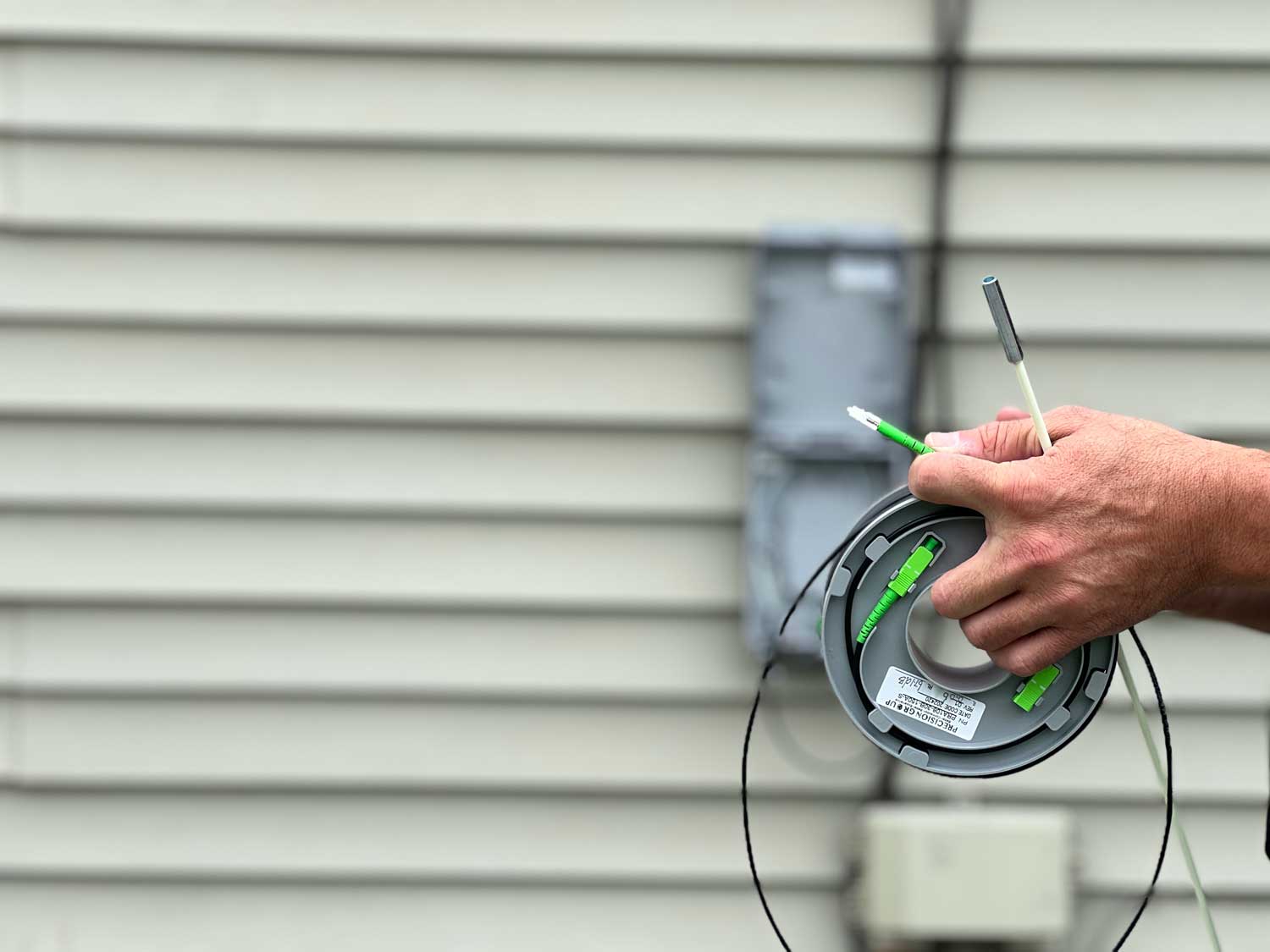
When people talk about fiber jumpers, one of the biggest differences comes down to the glass inside the cable.
G.657.A1 (A1) and G.657.A2 (A2) are both single-mode fiber standards, but they behave differently in the field, especially when installers are working through tighter routing conditions inside homes, wall plates, crawl spaces, and ONT installations.
At Precision Group, we spend a lot of time thinking about how installs actually happen in the real world. That’s why most of our indoor/outdoor jumpers utilize A2 glass.
The reason is simple: it gives installers more flexibility where they need it most.
What Is G.657.A1 vs G.657.A2 Fiber?
As fiber technology has evolved, the standards behind the glass have evolved with it.
Matt Kautter, Sales Engineer at Precision Group, explained it this way:
“They are both fundamentally similar. It’s just the bend radius and tolerance that’s the true differentiator between the two different standards”.
Both G.657.A1 and G.657.A2 are single-mode fibers. The biggest difference is bend tolerance.
A2 fiber allows for tighter bends without causing signal degradation or damage to the fiber. That becomes especially important inside homes and multi-dwelling units where technicians are constantly routing fiber through tighter spaces.
“The A2 is going to be a better solution,” Matt explained, “especially if you’re talking about home installs, MDUs, places where you have less room.”
Where A1 Still Makes Sense
This is not a conversation about “good” versus “bad” fiber.
Sean Whalen, Director of Sales – East U.S. at Precision Group, explained that A1 still works well in outside plant applications like flat drop or micro drop deployments running from the pedestal to the side of the house.
“In your flat drop or your micro drop, once you’re taking a jumper from the pedestal over to the home, it’s got a lot fewer bends,” Sean said. “You don’t need that extra bend radius, so there’s no reason to pay for an A2 when an A1 will work just great.”
Outside the home, installers typically have more room to work with gradual routing paths and fewer sharp turns.
Why A2 Works Better for Indoor Installs
As soon as fiber enters the home, installers start dealing with tighter routing conditions.
“When you leave a NID with a jumper, you’re almost automatically making a 90-degree turn,” Sean explained. “And from there, you’re making three, four, even five more 90-degree turns.”
This is where A2 becomes more installer-friendly. It can handle tighter bends, and installers have more flexibility during routing without risking signal issues or damaging the fiber.
“It’s got a wider tolerance so installers can be a little bit more aggressive in their turns and bends throughout the home,” Sean explained. “It’s just a better use of fiber.”

What Happens When Bend Radius Is Too Tight?
Using the wrong type of fiber in the wrong application can create problems during installation and after the install is complete.
If fiber bends tighter than its rated bend radius, installers can experience signal degradation and light loss.
“If you’ve got an A1 but maybe you’re taking a six millimeter turn around, you’re gonna have loss and signal degradation,” Sean said.
That can lead to:
- Lower performance
- More troubleshooting
- Repeat truck rolls
- Additional labor costs
- Customer frustration
And for newer technicians entering the industry, tighter bend tolerance creates even more room for mistakes.
“We have a lot of people aging out of the workforce and a lot of new technicians coming in,” Matt said. “If you’re using A2, you have more give for those novices to make mistakes and not damage the fiber.”
That flexibility can help reduce callbacks and avoid unnecessary reinstallations.
What the Industry Is Doing
According to Sean, A2 has largely become the standard for indoor premise jumpers.
“I would say ninety percent of the jumpers we sell have the A2 glass in them,” he said.
At the same time, A1 still remains common in outdoor drop applications because it’s cost-effective and performs well in those environments.
There is also a growing conversation around B3 fiber, which offers even tighter bend tolerance than A2. But for most residential installs, A2 continues to be the go to option.
“A2 covers a wide majority of install needs,” Sean said. “It’s kind of hit the sweet spot for modern construction and the way installs happen today.”

Which Glass Is Right for the Install?
A quick look at where A1, A2, and B3 fit in real-world broadband installs.
A1
Standard Bend Tolerance
Best For
Outside plant / drop applications
Typical Use
Pedestal → Home
Micro drop
Flat drop
Why Installers Use It
- Cost-effective
- Great for longer outdoor runs
- Fewer tight bends required
Keep in Mind
Less forgiving for tighter indoor routing
A2
Most Common for Indoor Installs
Improved Bend Tolerance
Best For
Indoor residential installs
ONTs
Wall plates
MDUs
Why Installers Use It
- Better for tighter turns
- More routing flexibility
- More forgiving during installs
- Helps reduce signal loss risk
Keep in Mind
Higher cost than A1
B3
Highest Bend Tolerance
Best For
Specialty or tighter routing applications
Typical Use
Emerging / niche use cases
Why Installers Use It
- Even tighter bend performance
Keep in Mind
Less common in residential installs today
Glass Availability Is Changing the Market
One challenge affecting the entire broadband industry right now is glass availability. Increased demand from data centers and other global applications has tightened supply and pushed pricing higher.
“The A2 has become harder to come by,” Sean explained. “The A2 glass that we can get our hands on has gone up in price weekly lately.”
That has pushed some manufacturers back toward A1 simply because it is easier to source.
But Precision Group has continued securing A2 supply through long-standing supplier relationships and advanced planning.
“Due to our relationships and the way that we value our partner suppliers, we have been able to secure enough of the A2 glass,” Matt said.
Beyond the Glass: Making Installs Easier
At Precision Group, the conversation doesn’t stop at the fiber itself.
The goal is always the same: simplify installation and improve the customer experience.
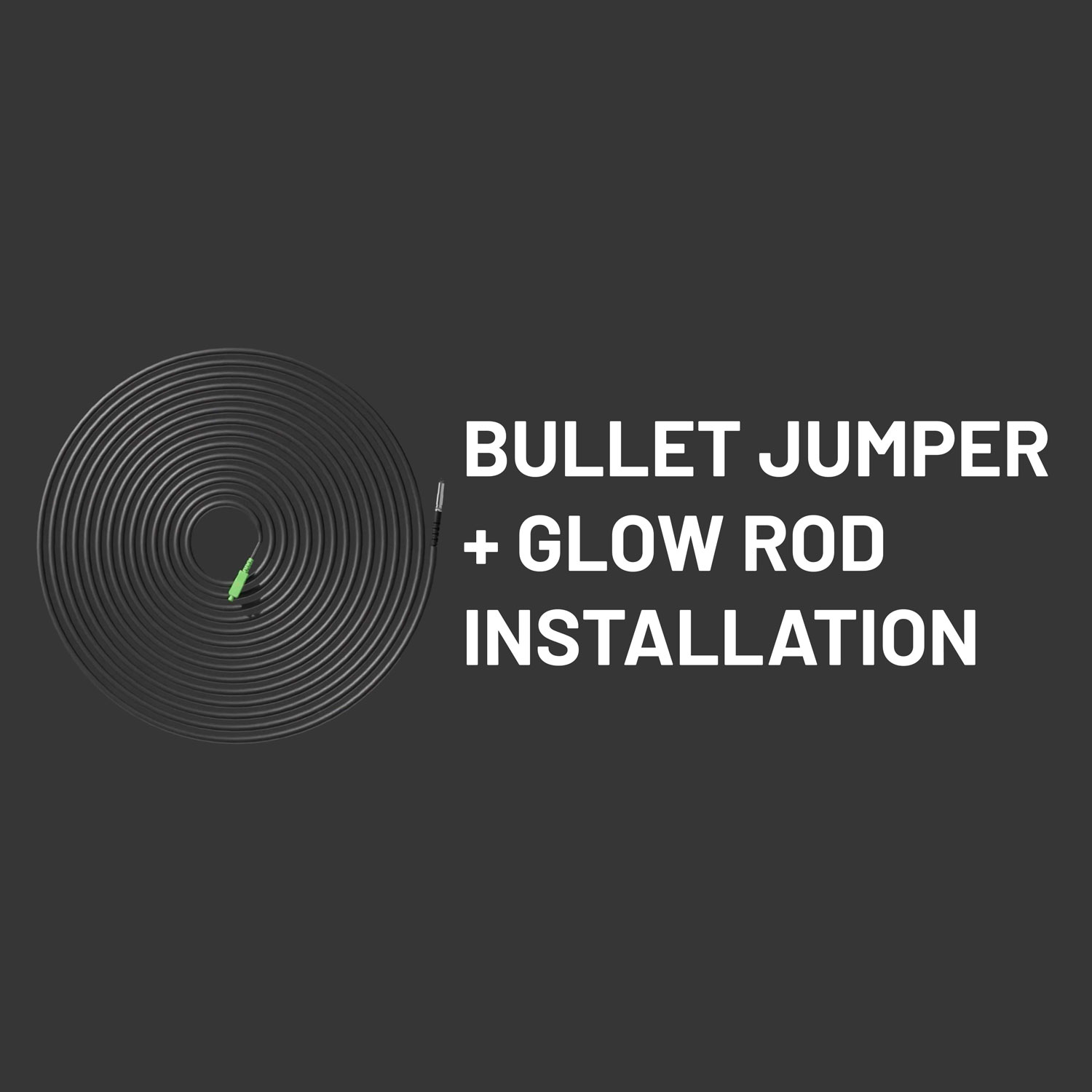
That’s why our Bullet Jumper and Glow Rod solutions were designed around real installer challenges in the field.
Sean highlighted one of the biggest advantages:
“You can attach our glow rod directly to the bullet jumper, make a smaller hole through the side of the customer’s house, and reduce pull tension during the install.”
Smaller holes. Cleaner installs. Less stress on the jumper. Problem solved.

Choosing the Right Fiber for the Application
A1. A2. B3.
Each standard has a place depending on the environment and the installation requirements.
But for most indoor residential installs, A2 continues to offer the balance that installers and providers are looking for.