From the Outside, the Broadband Industry Can Feel Stalled
Funding announcements come and go. Timelines slide. Ownership changes hands. Decisions around broadband infrastructure take longer than anyone wants them to.
From the Field, the Picture Looks Different
Networks are still being planned. Installers are still working. Service providers are still navigating competition, reliability expectations, and growth. What we’re seeing is not an industry at rest, but one holding tension, stacking decisions and preparing for what comes next.
Sean Whalen, Director of Sales – East U.S. at Precision Group, summed up the current moment simply:
“When I think about the state of the industry, the first word that comes to mind is limbo.”
That sense of limbo shows up across nearly every conversation we’re having.

Funding Is Fueling Uncertainty in the Broadband Industry
Large-scale broadband initiatives created real momentum when they were announced, and providers across the country began preparing for buildouts, equipment needs, and future growth. What followed, however, were delays that extended well beyond initial expectations.
From the field, those delays are not theoretical. They’re measured in years.
“Some states were awarded early and still didn’t see funds move when they were told,” said Joe Ascheman, Director of Sales – West U.S. at Precision Group. “Louisiana, for example, was supposed to see funding in late 2024, then early 2025. They’re only just starting to see money released now.”
Joe Ascheman, Director of Sales – West, Precision Group
The result has been a prolonged holding pattern. Providers know growth is coming, but many don’t know when it will materialize, or how quickly it will move once it does. That uncertainty has slowed purchasing decisions, stretched planning cycles, and delayed standardization efforts, even as competitive pressure continues.
Importantly, this pause is not driven by a lack of demand. The need for reliable broadband has not diminished, particularly in underserved and rural areas where access remains uneven. When funding timelines stretch, it not only impacts providers, it slows progress toward closing the digital divide for communities still waiting to be connected.
Consolidation Is Changing How Decisions Get Made
Alongside funding delays, consolidation continues to reshape the broadband landscape. Service providers are merging. Ownership structures are shifting. Private equity is more involved. Suppliers are consolidating as well.
On paper, consolidation promises efficiency: centralized purchasing, standardized specifications, and lower cost per home passed. In practice, it often introduces new friction, especially when decisions are made far from the field.
Regional differences matter. Underground construction presents different challenges than aerial builds. Climate, housing density, and local regulations all influence how networks are deployed. Yet consolidation frequently pushes toward uniform specs that do not always translate cleanly across markets.
This creates bottlenecks. Decisions take longer. RFQs stretch out. Installers wait for approvals while still being expected to keep projects moving. The gap between centralized planning and field execution becomes more visible, and more costly.
From our perspective, this tension is one of the defining dynamics of the industry right now.
Quiet Technology Shifts Are Reshaping the Last Mile
While funding delays and consolidation dominate headlines, some of the most meaningful changes in broadband are happening quietly at the edge of the network.
Higher speeds are no longer aspirational. The move toward 10G is becoming standard, and providers are pushing more capacity through existing fiber as demand continues to grow.
“10 gig is becoming more and more of the standard,” said Ascheman. “You’re going from a one-by-32 split to a one-by-64 split ratio. That shift alone changes how networks are designed and what equipment needs to support them.”
One of the most noticeable downstream effects has been the transition from outdoor ONTs to indoor ONTs. Indoor placement offers flexibility and performance benefits as speeds increase, but it also introduces new challenges. Indoor equipment is often larger, heavier, and more complex to mount and power — realities that directly affect installation efficiency in the field.
MDU’s Are the Biggest Design Challenge
At the same time, growth in multi-dwelling units continues to accelerate. Rural areas are becoming less rural, with new apartments, townhomes, and mixed-use developments appearing in places that once saw primarily single-family homes.
There is no such thing as a standard MDU. Every building is different. Historic structures require different approaches than new construction. Layouts, access points, and density vary widely, making it difficult to create a single bill of materials that works across every scenario.
This is where field-informed design becomes essential. Solutions must adapt to the environment rather than forcing the environment to adapt to the solution.

Pressure Is Coming From Multiple Directions
Providers today are balancing several pressure points at once:
- Increased competition, often from out-of-market providers
- Regulatory and mapping challenges that affect funding eligibility
- The risk of overbuilding areas that are already served
- Supply chain constraints tied to raw materials
Mapping accuracy has become especially critical. Inaccurate data can redirect funding, invite unnecessary competition, and disrupt carefully planned builds. In some cases, providers have chosen to move forward without waiting for public funding, opting instead to build using private financing to protect their footprint.
All of this pressure ultimately lands on broadband infrastructure that must be designed, built, and supported long before funding timelines are certain.
Supply chain concerns add another layer. Constraints are not limited to finished products; they begin at the core. Glass availability, chipsets, and other raw components affect everyone. This is not a situation where one manufacturer pulls ahead, it is a shared challenge that requires earlier planning and clearer communication.

What Hasn’t Changed Still Matters
Despite the pace of change, some fundamentals remain the same.
Providers are still focused on delivering reliable service, managing cost, building trust within their communities, and scaling networks responsibly. Legacy networks are not failing. Fiber installed years ago is still performing as designed.
What has changed is the rate at which demand has grown. The capacity that once felt generous is now being consumed faster than expected. The takeaway is not that earlier decisions were wrong, but that the broadband ecosystem evolved more quickly than anticipated.
Acting as a True Partner
The strongest relationships we see today are not transactional. They are collaborative.
Rather than simply selling products, effective partners act as extensions of the provider’s team, helping think through designs, tradeoffs, and long-term implications. That sometimes means acknowledging limitations, adapting solutions, or bringing in additional partners to complete the picture.
Whalen explained that approach clearly:
“When we act as a trusted advisor more than a sales guy, we win, the customer wins, the end user wins.”
That mindset matters more now than ever. Providers are making decisions today that will shape their networks for years, often under uncertain timelines and evolving conditions.
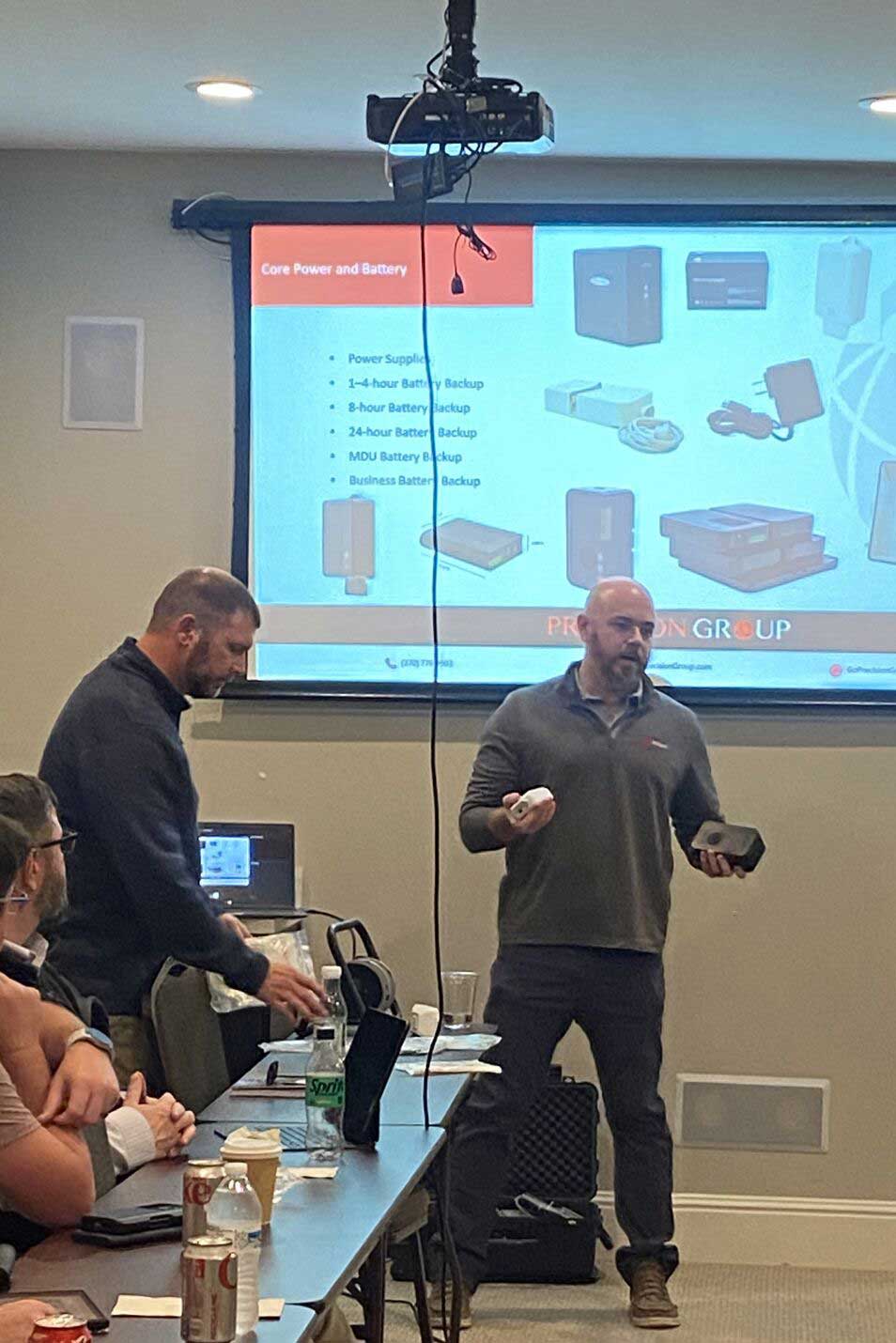
Sean Whalen, Director of Sales – East
Start Planning Before the Pressure Hits
It would be easy to make bold predictions about what the broadband industry will look like in the next 12 or 24 months. The reality is more nuanced.
Technology will continue to advance. Demand will continue to grow. Funding will eventually move. But the timing and pace will vary by region, provider, and project type. What matters most right now is not guessing what comes next, it’s preparing for it.
That preparation starts with planning earlier, even if installs are still months away. It means having open conversations about capacity, timelines, and constraints before pressure builds. And it means choosing partners who understand both manufacturing realities and what actually happens in the field.
Ascheman emphasized the importance of committing to that process early:
“At a certain point, you’ve got to make the decision, pick your partners, and start planning,” Ascheman said. “Even if you’re not installing something for six months, having that roadmap and those conversations early makes a difference.”
The providers who navigate this moment best won’t be the ones trying to react the fastest. They’ll be the ones who plan thoughtfully, communicate clearly, and build strategies that account for both opportunity and constraint.
A Steady Perspective in an Unsteady Moment
From where we sit, the broadband industry is not stalled. It is absorbing change, consolidating decisions, and preparing for its next phase of growth.
Momentum is building , even if it does not feel like it yet.
At Precision Group, our focus remains the same: supporting the people designing, building, and maintaining networks at the last mile. Bringing field-informed thinking to every solution. Staying grounded in real-world conditions. And helping our partners move forward , even when the path is not perfectly clear.