Why Supplier Partnerships and Distribution Play a Bigger Role in Broadband Builds Than Most Realize
In broadband deployments, success is rarely just about the product.
It comes down to how everything shows up in the field. When it’s needed, where it’s needed, and how it supports installs.
That doesn’t happen by accident. It’s driven by the strength of supplier partnerships and how distribution supports them.
Bryan Hughes, Vice President of Sales at Precision Group, puts it this way: “When people jump into real partnerships, they go way out of their way. You move faster, you solve problems differently, and there’s a level of trust back and forth.”
Not every relationship works that way. Some are transactional. Some are driven purely by price.
But when the right supplier partnerships are in place it shows up quickly in the field.

The Role of Distribution in Broadband: More Than Storage
Distribution isn’t just storage. It’s what keeps projects aligned with real timelines.
“Having material on hand is the biggest thing. Strong supplier partners make sure it’s on the shelf. It’s on time, it’s ready,” says Sean Whalen, Director of Sales – East U.S.
Distributors are not just holding inventory, but also positioning it based on demand, location, and timing.
Without that layer from distributors, providers can run into real limitations:
- Material is not staged near the job
- Lead times are tied directly to manufacturing cycles
- Projects become reactive instead of planned
As Brett Kirby, Vice President of Product explains, “The role of the distributor is to smooth out lead times and be there during times of varying demand and urgent timelines.”
How Inventory Strategy Impacts Install Execution
When distribution is aligned with the project, installs become more predictable.
When a customer works with a distributor to forecast their demand, the distributor can put the product on the shelf so it fits the project schedules.
They are tracking what is being used, what is running low, and what needs to be replenished before it becomes an issue. In some cases, they are managing the customer’s inventory as an extension of their own operation.
“They know exactly what’s in there, they know what the lead times are, so it’s quick. The customer goes into their own warehouse, grabs material, and it’s being refilled behind the scenes,” says Whalen.
This changes how projects run.
Instead of reacting to shortages, material is already accounted for. Teams pull what they need and keep moving. Planning happens in the background, which keeps installs consistent across locations and phases of the build.

Where Partnerships Show Up in the Field
The difference between a transactional relationship and a real partner shows up early, often before anything reaches the jobsite.
Joe Ascheman, Director of Sales – West U.S., shares a common example:
“If a customer cuts a quarter’s worth of material, we’ve seen distributors take that and double it, even without a PO in hand, just to get ahead of it.”
That decision is not about a single order. It is about understanding how the project is likely to move and preparing for it.
Where Cost and Performance Are Won or Lost
Partnerships also show up in cost.
In most infrastructure projects, labor represents the majority of total cost. Delays tied to missing or late material have a much larger impact than the material itself.
“Labor costs way more than material. Having a bunch of guys standing around waiting is going to hurt them more than trying to find a couple extra widgets,” says Whalen.
Downtime becomes the biggest risk
If material is late or missing, crews are left waiting. That time is expensive and cannot be recovered.
Small gaps create larger ripple effects
A missing component or delayed shipment can slow down multiple steps in an install, not just one.
Strong partnerships reduce those gaps before they happen.
When distributors are planning ahead, managing inventory, and communicating early, those delays are far less likely to happen.
Delays tied to material availability remain one of the most common causes of project slowdowns across construction and telecom builds.
What Defines a Strong Distribution Partner
The difference isn’t products. It’s how partners operate.
The distributors that stand out are not just supplying material. They are actively managing risk, communication, and timing on behalf of their customers.
How the Manufacturer–Distributor–Installer Loop Works
At Precision Group, this relationship stays connected to the field.
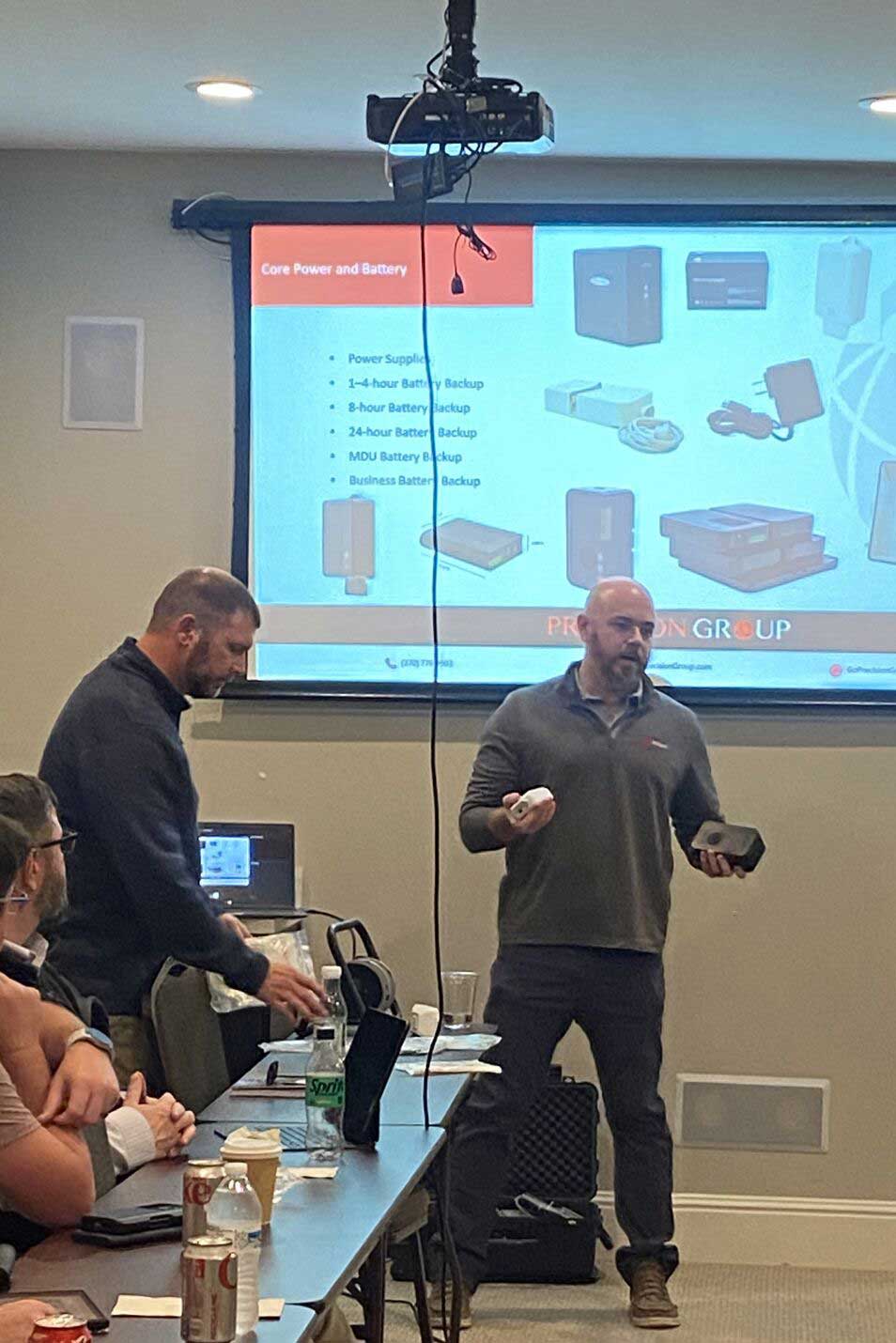
“We are a very high-touch sales team, and we’re constantly engaged with those distributor salespeople and on site with their customers,” says Kirby.
The connection works as a continuous loop:
- 1
Field insight comes in directly
Precision Group is regularly on site with distributor teams and customers. Feedback comes from real installs, not assumptions. - 2
Distributors extend visibility across projects
Distributor partners are working closely with customers day to day. They see how materials are used, where issues show up, and how projects are progressing across multiple jobs. - 3
Products evolve based on real use
That feedback feeds directly into how products are refined, adjusted, and improved over time.
Because that loop stays active, decisions are grounded in how installs actually happen, not just how they are designed.
How Distribution Is Evolving in Broadband
As fiber deployments scale, distribution is becoming more integrated into how projects are planned and executed.
Kirby shares, “There’s a lot of project-related activity. Distributors have more impact now than they used to, because they’ll work alongside customers and stock all of the product for projects.”
Another shift is happening around kitting and customization:
“More and more distributors are offering value-added services,” says Ascheman. “They’re customizing kits, and even adding electronics to deliver exactly what the customer needs.”
Because distributors can pull from multiple manufacturers, they can consolidate materials into something that is ready for install, not just delivered as separate components.
Why Timing and Alignment Are Critical Right Now
As projects scale, coordination becomes more important, including:
- Aligning on inventory strategy early
- Forecasting demand accurately
- Choosing partners who plan ahead and communicate clearly
This is what we’re seeing across the industry right now. Timing is uncertain, and pressure builds quickly. We recently shared more on this in our blog on momentum building in the broadband industry.
The teams that move effectively are the ones that plan ahead and align early.
“Customers really need to align and pick partners,” says Ascheman. “It may seem early, but with the way the industry is going, locking in strong relationships in the supply chain is critical.”

Precision Group has always approached product development from the field back.
Made by installers, for installers.
That same mindset applies to partnerships.
It’s not just about having the right product. It is about having the right partners behind it.
The ones who plan ahead.
The ones who communicate early.
The ones who understand how installs actually happen.
That’s what keeps projects aligned from start to finish.